



Car Dealer SEO: A Practical Guide to Ranking Locally
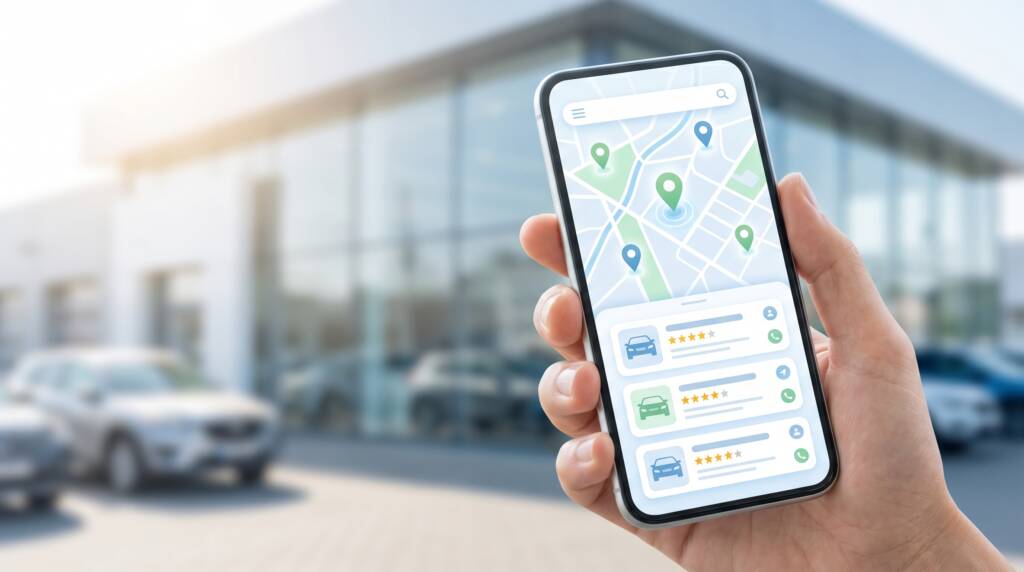
Car dealer SEO puts your inventory in front of shoppers at the exact moment they search for a vehicle like yours. Done right, it drives free, high-intent local traffic that paid ads can’t sustain on their own.
This guide gives dealership marketing teams a practical playbook:
- How SEO turns into real leads and showroom visits
- The local tactics that win the map pack
- The VDP and SRP fixes that move rankings
TL;DR
- Local SEO and Google Business Profile are the foundation of dealer visibility.
- VDP and SRP pages are your highest-value SEO assets.
- Photo quality is an SEO factor. File names, alt text, and compression affect rankings.
- Results compound. Expect 4-6 months before meaningful ranking movement.
- CarCutter helps standardize the visuals your VDPs need to rank and convert.
How Does SEO Help Car Dealerships Generate More Leads
Unlike paid advertising, organic rankings keep generating traffic after the budget runs out.
The honest challenge: connecting car dealer SEO to sold units is harder than connecting paid search to leads. Most GMs want a line item that says “SEO sold 14 cars this month.” That number does not exist cleanly, because organic traffic often shows up as “direct” in your DMS. Shoppers:
- Visit a VDP
- Leave the site
- Return later through a bookmark or typed URL
- Then submit a lead
The practical fix: use VDP organic traffic as your proxy metric.
- Track organic sessions to inventory listings in GA4
- Monitor assisted conversion paths with organic touchpoints
- Compare VDP engagement by source
What makes car dealer SEO valuable is local intent. When someone searches “used trucks near me,” they are in-market and close to a decision. Your broader strategy depends on this foundation. See how it fits in automotive advertising.
What Are the Best Local SEO Tactics for Car Dealers
For car dealer SEO, your Google Business Profile (GBP) is the single most important local asset. It drives the map pack, which appears above organic listings.
GBP optimization priorities:
- NAP consistency: Name, address, and phone must match exactly across every directory.
- Fresh photos: Upload recent inventory and dealership images regularly.
- Review management: Respond to every review within 24 hours.
- Complete profile: Fill every field, including hours, departments, and vehicle categories.
Build location pages, but avoid the duplicate-content trap. If you create 30 city pages that are 90% templated with only the city name swapped, Google will ignore them. Each page needs real content:
- Local inventory counts
- Location-specific pricing context
- Local testimonials
- Neighborhood landmarks
Set realistic timeline expectations:
| Timeframe | What to expect |
|---|---|
| Months 1-2 | GBP cleanup and schema implementation |
| Months 3-4 | Indexing improvements in Search Console |
| Months 5-6 | Initial ranking movement on hyper-local queries |
How to Optimize VDP and SRP Pages for Higher Search Rankings
Your VDP and SRP pages are where car dealer SEO meets revenue. Follow these steps:
- Write unique title tags. Include year, make, model, trim, and city. Example: “2024 Toyota Camry SE for Sale in Denver | [Dealer Name].”
- Implement vehicle schema markup. This structured data helps search engines display price, mileage, condition, and availability.
- Treat photos as an SEO factor. Since 90% of shoppers consider photos extremely important (JD Power, citing Cox Automotive data), strong imagery means longer sessions and lower bounce rates. Use descriptive file names, write alt text, and compress to WebP for sub-3-second loads.
- Fix the sold-VDP problem. When a vehicle sells, that URL often 404s and drains crawl budget. Redirect sold VDPs to the relevant SRP category page and update sitemaps regularly.
For a full photo workflow that supports SEO, see dealership inventory photos.
If you want a faster path to consistent, optimized imagery, CarCutter’s AI background processing and guided capture standardize photo quality at scale.

Content and Link Building Strategies for Car Dealers
Beyond inventory pages, content builds the domain authority that lifts every page.
Content that works:
- Model comparison pages (e.g., “2024 Camry vs Accord”) capture mid-funnel intent.
- City and neighborhood pages, when differentiated, capture geographic traffic.
Link building that works for dealers:
- Chamber of commerce memberships
- Local business directories
- Community sponsorships
- Local news coverage
- OEM partnership links
Immersive content like 360-degree experiences can also attract natural links. Learn more in augmented reality car dealerships.
Key Takeaways
Car dealer SEO is a long-term investment that reduces your dependence on paid ads while driving high-intent local traffic.
- GBP optimization drives map pack visibility
- VDP and SRP optimization (titles, schema, photos, speed) drives leads
- Photo quality is both a UX and SEO factor
- Avoid templated location pages; differentiate with real content
- Use VDP organic traffic as your attribution proxy for SEO ROI
If you would like a second pair of eyes on your inventory’s visual SEO readiness, CarCutter website can help assess your current photo standards.
Frequently Asked Questions
SEO compounds over time. Expect 1-2 months for GBP cleanup and technical fixes, 3-4 months for indexing improvements visible in Search Console, and 5-6 months for meaningful ranking movement on hyper-local queries. Paid search fills the gap while organic builds.
GBP drives the local map pack, which appears above organic results for location-based searches. For dealerships, this is often the first thing a shopper sees. NAP consistency, fresh photos, and active review management directly influence your map pack ranking.
Vehicle schema is structured data that helps search engines understand your inventory listings, displaying details like price, mileage, and condition in search results. It is underused in the dealer space and provides a competitive edge for VDP visibility.
Photos impact user engagement metrics like time on page and bounce rate, which influence search rankings. Optimized image file names, alt text, and compression also contribute directly to how search engines crawl and index your VDP pages.
Sold VDPs that return 404 errors waste crawl budget and create broken links. Redirect sold VDPs to the relevant SRP category page or a similar listing, and update your sitemap regularly to keep your site clean for search engines.
Not on national keywords. Focus on hyper-local queries where you have geographic advantage: searches like “used trucks near [city]” or “[make] under $[price] [region].” Own your local map pack and invest in location-specific content.
Listings with 40+ photos see 64.8% higher VDP views according to Cox Automotive. Aim for 30-40+ images per vehicle, optimized with descriptive file names and alt text for search engine visibility.
Use VDP organic traffic as your proxy metric. Track organic sessions to inventory pages in GA4, monitor assisted conversion paths that include organic touchpoints, and compare lead quality by traffic source over time.