



Automotive Advertising: Strategies That Drive Dealer Leads
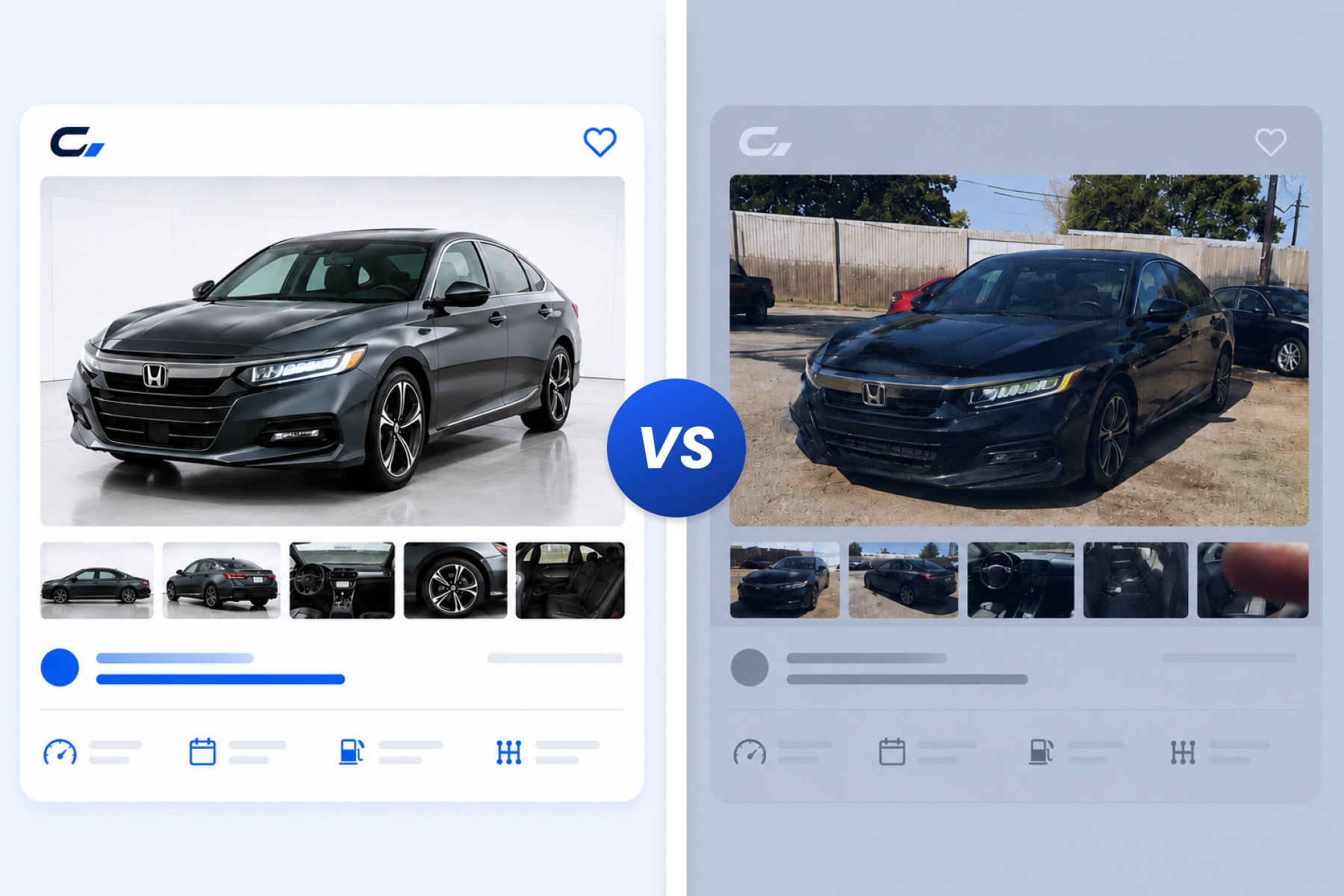
Most dealerships spend more time picking ad platforms than thinking about what those ads point to. But every dollar of automotive advertising leads to the same place: your vehicle listing.
If the photos are weak and the page is thin, no budget will fix the conversion problem.
This guide shows you what actually drives results:
- The operational scale that turns ad spend into sold units
- The visual foundation your listings need
- The channel strategy that converts clicks into leads
TL;DR
- Used vehicle custom photos increase VDP click-through by 349% vs stock images; new vehicles see a 133% lift
- 75% of buyers use third-party sites, making visual quality across syndicated channels non-negotiable
- Omnichannel buying is the norm: 63% of buyers prefer a blend of online and in-person activities
- Automotive advertising that scales requires repeatable photo workflows and centralized standards
- CarCutter’s AI-powered capture and processing helps multi-rooftop groups maintain visual consistency at speed
What Makes Automotive Advertising Effective for Dealerships
What is automotive advertising? Automotive advertising is how a dealership promotes its inventory across paid and organic channels (search, marketplaces, social, email, and connected TV) to attract in-market buyers and generate leads. Its effectiveness depends heavily on the quality of the vehicle listing each ad points to.
Effective automotive advertising is not about outspending competitors. It is about connecting the right vehicle to the right buyer at the right moment with the right visuals.
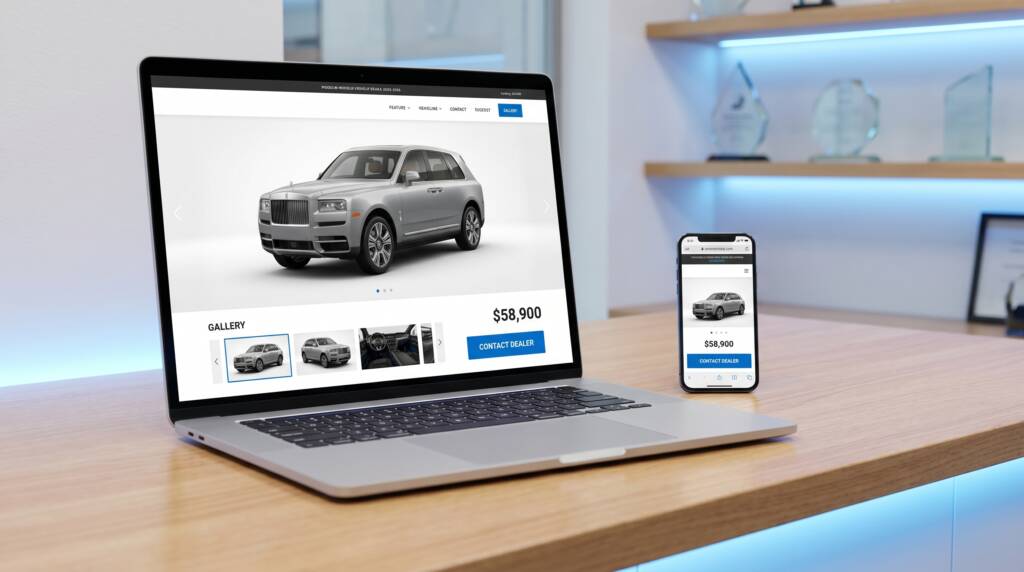
The channel mix has fragmented, but one thing stays constant across all of them: your vehicle listing is the ad. If the photos are poor, the copy is thin, and the VDP loads slowly, you are paying to send traffic to a page that will not convert.
Used and new vehicles need different approaches.
| Factor | New vehicles | Used vehicles |
|---|---|---|
| OEM co-op support | Yes | No |
| Creative assets | Standardized | Must be created per unit |
| Price anchor | MSRP | None |
| Photo CTR lift (custom vs stock) | 133% | 349% |
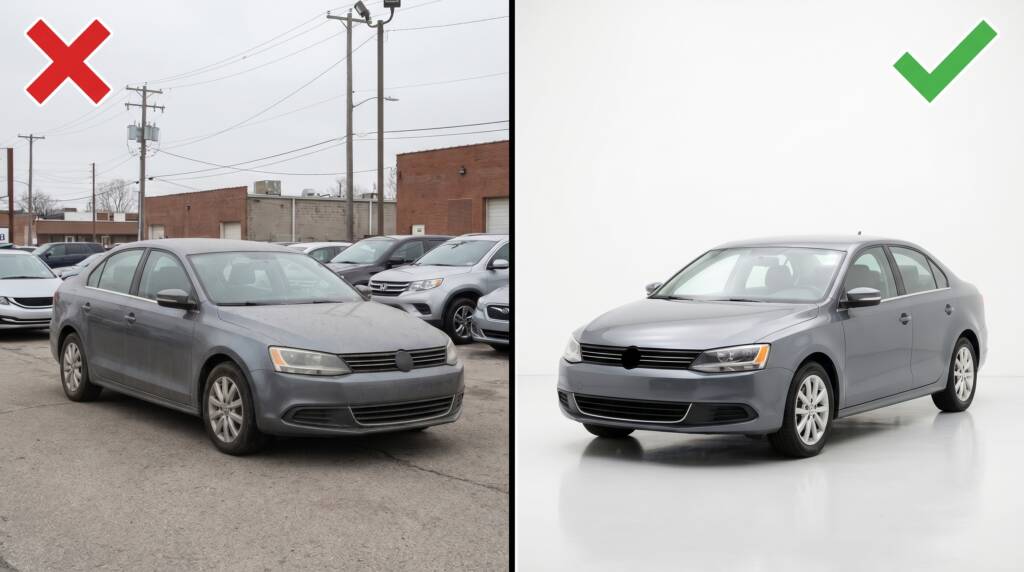
The data proves the gap. According to Cox Automotive, custom photos lift click-through on used/CPO VDPs by 349% versus stock images.
The takeaway is simple: if your used inventory runs stock photos, you are leaving your biggest gains on the table.
One quick definition. A quality lead is a shopper who:
- Provides a valid phone number
- Responds within 24 hours
- Is actively in-market within 30 days
How Vehicle Visuals Impact Automotive Advertising Performance
Automotive advertising performance lives and dies on the VDP. A listing with 40+ high-quality photos earns 64.8% more engagement than a sparse page.
Visual quality shapes every channel, not just one:
- Paid search: Your ad earns the click. The VDP decides whether it becomes a lead. Poor photos waste spend.
- Marketplace listings: 75% of buyers research on third-party sites. Your SRP thumbnail is the first impression, so clean backgrounds and tight framing win the scroll.
- Social: Carousel and dynamic ads pull straight from your photo library. Inconsistent images look unprofessional.
- Email and SMS: Feature campaigns perform better with professional hero shots that build trust.
The result shows up in your numbers. Dealers who invest in visual consistency and strong dealer website UX see lower cost per lead and lower cost per sold unit. You do not need a bigger budget. You need better assets feeding every channel.
Where SEO Fits Into Your Automotive Advertising Strategy
New to SEO? Here is the short version. SEO (search engine optimization) decides whether your dealership and inventory show up when a buyer searches Google for something like “used trucks near me.”
Why it matters for dealerships:
- It is free traffic. Unlike paid ads, you do not pay per click once your pages rank.
- It captures in-market buyers. Most shoppers start online, close to a decision.
- It compounds over time. Rankings build and keep working for you.
SEO and visual quality are connected. High-quality inventory photos keep visitors on the page longer, which lifts rankings over time. Photo optimization is part of SEO too: descriptive file names, proper alt text, and fast-loading compressed images all help Google index your inventory listings.
For a full walkthrough, see our guide to car dealer SEO.
Automotive Advertising Trends Shaping Dealer Marketing in 2026
Three shifts are reshaping automotive advertising this year.
1. Omnichannel is no longer optional. The 2025 Cox Automotive Car Buyer Journey Study found that 63% of buyers want a blend of online and in-person activities. Your advertising must deliver consistent branding and information whether a buyer is on their phone at 11 PM or on your lot at noon.
2. Visual-first formats win attention. Shoppers spend more time on listings with rich media, including 360-degree spins and detailed galleries. For more, see our article on augmented reality car dealerships.
3. AI is accelerating the workflow. Photographing, processing, and listing a vehicle used to take hours. AI tools like CarCutter’s mobile app and background processing compress that timeline. One 25-rooftop group using CarCutter cut capture-to-publication time by 23 minutes per vehicle.
If you want to see how automated visual production fits your workflow, CarCutter website offers a demo walkthrough.
One overlooked trend: aged inventory. Units sitting 45+ days need a different approach. For older units, adjust creative angles, pricing signals, and channel allocation separately.
Building an Automotive Advertising Strategy That Scales
Scaling across multiple rooftops means solving three problems: consistency, accountability, and measurement.
Start with the visual foundation. A repeatable photo workflow with defined shot lists, staging standards, and AI processing keeps every vehicle on-brand across every location.
For more details, see dealership inventory photos.
Address the governance challenge. The biggest failure point in multi-rooftop groups is not technology. It is 8 GMs who each think they know better than the group standard. To fix it:
- Centralize photo standards, background specs, and branding
- Use a platform like CarCutter Hub for visibility into compliance
- Flag stores publishing 12 photos when the standard is 30
Solve the measurement problem honestly. Attribution is broken. Google claims 40 leads. Your marketplace claims 60. Your DMS shows 22 sold units. No single platform gives you the full picture.
Instead of chasing perfect last-click data, track VDP-level engagement as your working proxy:
- Lead form submissions
- Views
- Photo gallery interactions
Key Takeaways
Automotive advertising performance comes down to three things: visual quality, channel discipline, and operational consistency.
- Used vehicles gain the most from photo investment (349% CTR lift vs stock)
- Every channel depends on the same listing quality
- SEO drives free, ongoing traffic; photo quality directly affects rankings
- Multi-rooftop scaling needs centralized standards and clear accountability
- AI tools like CarCutter maintain quality at speed across locations
If you would like a second pair of eyes on your visual merchandising workflow, the CarCutter website can help you benchmark your process and find where automation fits.
Frequently Asked Questions
Photo quality affects every channel. Listings with custom photos earn higher click-through rates, so the same budget delivers more engaged visitors. Improving photos often beats increasing ad spend.
New vehicles benefit from OEM co-op funding, incentives, and standardized creative. Used vehicles are unique units with no co-op support, so listing quality and visuals matter even more.
Perfect attribution is hard. Focus on VDP-level metrics: views, photo interactions, time on page, and lead submissions. Track them by channel and location to see what drives sold units.
The 2025 Cox Automotive Car Buyer Journey Study found 75% of buyers use third-party websites. Your visual quality on those listings matters as much as on your own site.
Centralize photo standards, background specs, and branding guidelines. Use a management hub that provides visibility into each location’s compliance. Define clear SLAs for photo count and time-to-list, and assign accountability at each rooftop.
Units sitting 45+ days need different creative and channel strategies than fresh inventory. Consider reshooting photos from new angles, adjusting pricing signals, and reallocating budget toward channels with higher intent traffic for older units.
Increase your photo count and quality. Listings with 40+ photos generate 64.8% higher VDP views according to Cox Automotive. Start by establishing a minimum photo standard and consistent backgrounds across your inventory.
SEO makes your pages easier for Google to find and rank. For dealerships, it decides whether your vehicles appear when a local buyer searches “used trucks near me.” It drives free, continuous traffic to your VDPs without paying per click.