



Augmented Reality Car Dealerships: What Works in 2026
The term augmented reality car dealerships gets used loosely, and that confusion costs dealers money on the wrong tools. This guide cuts through it.
You’ll learn:
- How to start without overcommitting to unproven tech
- What is actually AR versus immersive vehicle content
- Which tools deliver engagement gains today
TL;DR
- True AR overlays digital objects onto the real world through a smartphone camera. It is not the same as 360 spins or interactive photos.
- Broad dealer-level ROI data on AR does not exist yet.
- Immersive content (360 spins, hotspots, AI-enhanced visuals) is available now and delivers measurable engagement gains.
- Strong source photography is the foundation for any immersive strategy.
- CarCutter’s 360 experiences and AI processing provide practical, scalable immersive content.
What Is Augmented Reality and How Does It Apply to Car Dealerships
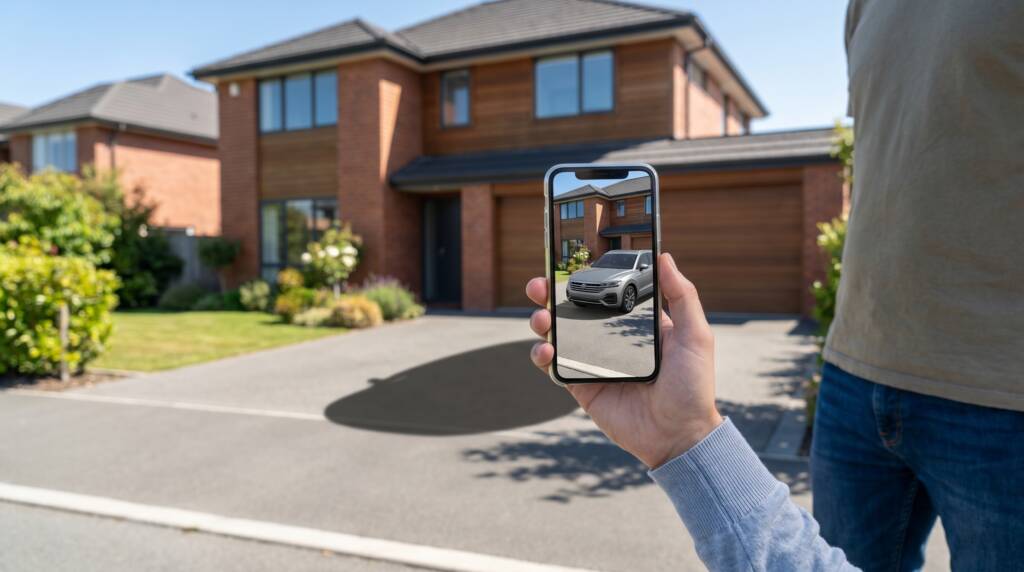
Definition: Augmented reality (AR) overlays digital objects onto the real world through a device’s camera. A buyer points their phone at their driveway and sees a 3D-rendered vehicle placed in the scene, with accurate proportions and lighting.
Precision matters when you are deciding where to invest. Here is how the formats compare:
| Technology | What it does | Needs a headset? | Available at dealer level today? |
|---|---|---|---|
| True AR | Overlays digital vehicle onto real space | No (phone) | Limited, mostly OEM |
| Virtual reality (VR) | Replaces the entire environment | Usually yes | Rare |
| 360 spin / interactive gallery | Lets shoppers rotate and explore a real vehicle | No | Yes, widely |
Where true AR lives today. It exists mostly at the OEM level. Manufacturers like BMW and Hyundai have launched AR configurators for new models. At the dealership level, especially for used vehicles, true AR is still limited because it requires high-quality 3D models for each car.
What you can use right now is immersive vehicle content:
- Rich photo galleries
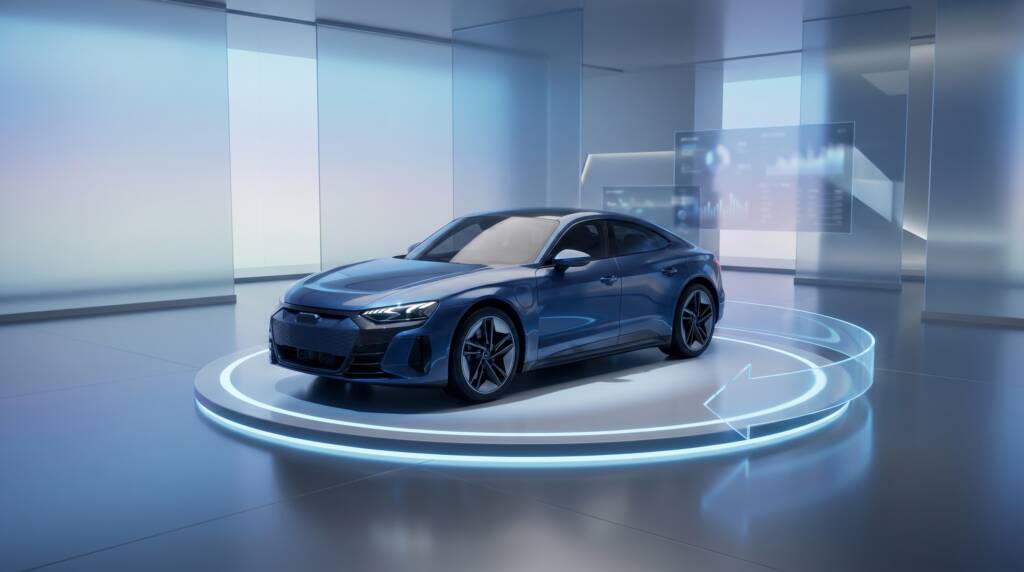
- Interactive 360-degree exterior spins
- Interior hotspot overlays
- AI-processed studio-quality backgrounds
How Does AR and Immersive Content Improve the Car-Buying Experience
The business case for immersive vehicle content centers on buyer confidence.
Shoppers who interact with rich content spend more time on listings and arrive with fewer unanswered questions. The 2025 Cox Automotive Car Buyer Journey Study found 63% of buyers prefer a blend of online and in-person experiences.
JD Power reports that 90% of shoppers consider photos extremely important, and 40% expressed willingness to buy based on images alone. One caveat: that 40% reflects buyer confidence in visuals, not actual behavior without a physical inspection.
For used vehicles, condition accuracy matters most. Any experience that shows a pristine interior when the real unit has wear will erode trust. The most effective content is honest. This engagement boost connects to your wider strategy. See how visual quality supports advertising ROI in automotive advertising.
Practical Ways to Bring Immersive Vehicle Experiences to Your Dealership
You do not need full AR to benefit. Several proven tools are available today.
360-degree exterior spins
- Let shoppers rotate a vehicle and view it from every angle
- Lightweight and embed easily on any device
- CarCutter’s 360 experiences build fully backgrounded spins from mobile-captured photos
Interactive hotspots
- Overlay clickable information on vehicle images
- Turn a passive gallery into active exploration
AI-enhanced photography
- Brings studio-quality consistency without a physical studio
- CarCutter offers both 2D backgrounds and true 3D virtual showrooms with full branding
Guided capture workflows
- CarCutter’s mobile app (iOS and Android) walks photographers through each angle with real-time AI quality checks
To see how 360 spins and AI-processed visuals work in practice, the CarCutter website offers a hands-on demo.
Operational Considerations for Dealerships Exploring Immersive Content
Before investing in any immersive technology, get the fundamentals right.
Connect immersive content to SEO. Rich media on VDPs improves engagement signals search engines reward. See [INTERNAL LINK: car dealer SEO].
Photo quality is the foundation. Inconsistent source photos undermine any experience. A repeatable workflow with defined shot lists is a prerequisite. See dealership inventory photos.
Speed matters at volume. If you process 20-50 vehicles a day, the pipeline must be fast. One 25-rooftop group using CarCutter cut capture-to-publication time by 23 minutes per vehicle.
Consistency requires centralization. Centralized processing through CarCutter Hub keeps every rooftop aligned.
Be honest about AR readiness. Broad dealer-level ROI data on AR does not exist yet. 360 spins and AI-processed photography deliver measurable results now, with a clear path to more advanced AR as it matures.
Key Takeaways
Augmented reality car dealership applications are coming. The practical path forward starts with immersive content that works today.
- True AR is mostly at the OEM level today
- Broad dealer-level ROI data on AR does not exist yet
- 360 spins, hotspots, and AI-enhanced photography deliver measurable engagement now
- CarCutter provides practical immersive tools that scale across multi-rooftop operations
- Strong source photography is the non-negotiable foundation
To explore how immersive content fits your workflow, CarCutter website can walk you through what is available today.
Frequently Asked Questions
Augmented reality overlays digital objects or information onto the real world through a device’s camera. In automotive retail, this could mean a buyer pointing their phone at their driveway and seeing a vehicle rendered in the space. True AR is distinct from 360-degree spins or interactive photo galleries, which are immersive vehicle content but not AR.
No. 360-degree spins are immersive vehicle content that lets shoppers rotate and examine a vehicle from every angle. They do not overlay digital elements onto the physical world, which is what defines AR. Both improve engagement, but they use different technology.
True AR for used vehicles faces a unique challenge: each unit is different, making standardized 3D models impractical at scale. Immersive content like 360 spins and high-quality photo galleries is more practical for used inventory today, with AR applications expected to mature over time.
360-degree exterior spins, interactive interior hotspots, AI-processed studio-quality backgrounds, and rich photo galleries are all available and proven to improve shopper engagement on vehicle detail pages.
Interactive visual content keeps shoppers on VDPs longer, reduces bounce rates, and builds buyer confidence before a showroom visit. These engagement improvements also send positive signals to search engines, supporting organic rankings.
You need a consistent photo capture workflow and a processing platform. CarCutter’s mobile app guides the exterior capture process, and the platform automatically creates fully backgrounded 360 spins with an embeddable web player for your site.
Yes. Immersive content improves VDP engagement regardless of dealership size. Tools like CarCutter’s mobile app and AI processing are designed to be operationally simple, so smaller teams can produce professional results without dedicated photo staff.
Every immersive format depends on strong source photography. Low-resolution or inconsistent photos produce poor 360 spins and undermine interactive features. A repeatable capture workflow with quality checks is the foundation for any immersive content strategy.