



Virtual Car Showrooms: How Dealerships Create Showroom-Quality Listings Online
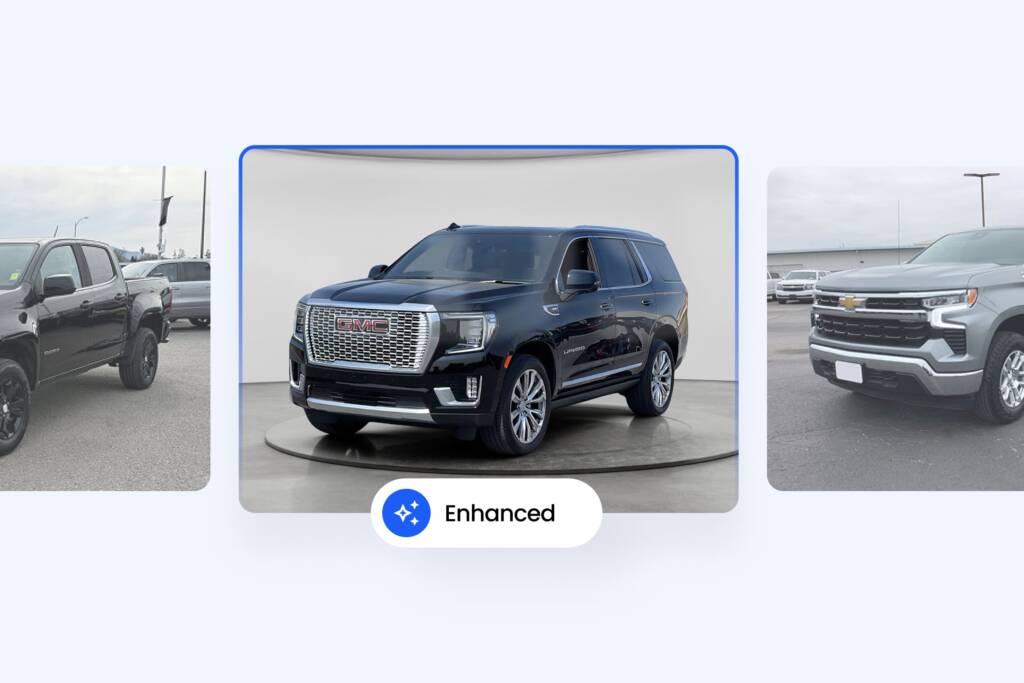
This article covers what virtual car showrooms are, how they work, and how to evaluate whether they fit your dealership’s merchandising strategy. Whether you manage 1 rooftop or 10, you’ll find practical guidance on improving listing quality, reducing photo workflow friction, and enforcing visual standards across your inventory.
TL;DR:
- Virtual car showrooms replace inconsistent lot backgrounds with polished, branded 3D environments, solving 3 common used-inventory challenges:
- aged unit perception,
- multi-rooftop visual inconsistency,
- and marketplace comparison disadvantage.
- For dealerships where time-to-list and turn matter, virtual showrooms reduce workflow complexity and enforce merchandising standards without a physical studio.
- Best fit: multi-rooftop groups with high used-vehicle volume where lot photography quality varies across locations.
What Is a Virtual Car Showroom and How Does It Work?
Virtual car showrooms are AI-powered backgrounds that place your vehicles inside realistic, professionally lit showroom environments. No physical space required. Your team captures images on the lot or anywhere on-site, and the software replaces the background with a 3D-rendered showroom matched to each vehicle’s angle, lighting, and perspective.
This isn’t a flat 2D image swap, and it isn’t a metaverse gimmick. True virtual showrooms use 3D rendering to produce thousands of background variations so every vehicle angle sits naturally in the scene. Shadows fall correctly. Floor reflections respond to the car’s position.
Here’s how the process works:
- Your team photographs the vehicle using a mobile app or existing camera setup
- AI segments the vehicle from its original background
- The system matches the vehicle’s angle to the correct 3D showroom perspective
- Realistic lighting, shadows, and reflections are applied automatically
- The finished image is ready for your website, VDP, or marketplace listing
Think of it as a post-processing layer, not a workflow overhaul. Your photo capture process stays largely the same. The difference is what happens after the images are taken.
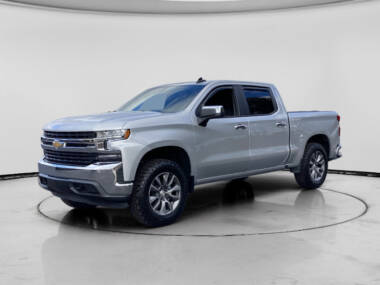
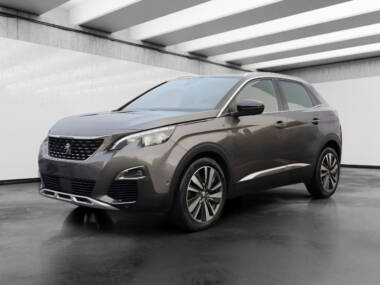
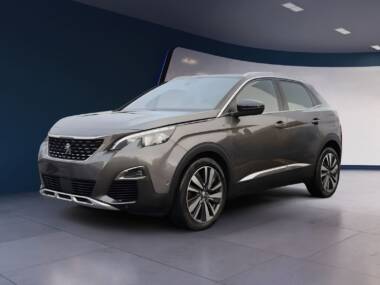
CarCutter’s virtual showrooms offer both turntable scenes (vehicle on a rotating platform) and corner scenes (showroom perspective shifts based on camera angle), with fully customizable materials, colors, lighting, and branding.
How Virtual Showrooms Improve Your VDP and Online Listings
For used inventory, virtual car showrooms solve 3 specific problems.
Aged unit perception. A vehicle photographed on a snow-covered lot in November still shows that background in January. Virtual showrooms reset the visual clock. The listing looks current regardless of when the photo was taken.
Marketplace comparison disadvantage. J.D. Power reports that 90% of shoppers consider photos extremely important when evaluating a vehicle online. On third-party sites, your used listings compete directly with franchise CPO vehicles that often feature cleaner, more polished imagery. A consistent virtual showroom background levels that playing field.
Inconsistent multi-rooftop output. If your 8 stores produce 8 different styles of lot photography, your inventory page looks disjointed. Virtual showrooms unify the output regardless of who took the photo or where.
The broader context supports this investment. According to the Cox Automotive 2024 Car Buyer Journey Study, 92% of consumers research vehicles online before purchase, spending over 14 hours during their buying journey. Your VDP is often the first and only impression you get.
Virtual Car showrooms
Virtual Showrooms vs. Traditional Lot Photography
Most dealerships still rely on lot photography. A skilled photographer can produce strong results, but the approach has well-known operational limits.
Traditional Lot Photography:
- Backgrounds vary by weather, time of day, and lot conditions
- Quality depends on individual photographer skill and consistency
- Multi-rooftop operations struggle to maintain uniform standards
- Seasonal changes date older inventory
Automated Virtual Showroom Workflow:
- Every vehicle gets the same polished, branded background
- AI handles background replacement, centering, and cropping automatically
- Processing time is measured in minutes
- Standards are enforced at the platform level, not by individual operators
Important caveat: Virtual showrooms are a presentation layer. If the underlying photo is blurry, poorly framed, or taken from a bad angle, no background will fix that. The quality of the original capture still matters.
That’s why CarCutter pairs its virtual showrooms with a mobile capture app that includes guided framing, shot list templates, and real-time AI quality checks. The capture and the presentation work together.
When virtual showrooms may not be the right move: If your bottleneck is recon speed rather than photo quality, fix throughput first. If your lot photography is already excellent and consistent, the lift may not justify the cost. And if your staff won’t follow the capture process, virtual showrooms can’t fix bad inputs.
Want to see how virtual showrooms look with your own inventory? CarCutter offers a demo where you can test it firsthand.
How to Choose the Right Virtual Showroom for Your Dealership
Before committing, evaluate these 5 areas:
1. 3D realism vs. flat 2D backgrounds
True 3D showrooms render perspective-matched scenes with realistic shadows and reflections. Flat 2D backgrounds paste the same static image behind every angle. Ask for sample images from multiple vehicle orientations. CarCutter renders over 12,000 images per scene to match any angle, producing photorealistic results.
2. Branding customization
Look beyond a simple logo watermark. CarCutter offers 4 levels: static logo overlays, painted logos embedded in the showroom wall, tiled logo patterns, and fully tailor-made showrooms. Your showroom should reinforce your dealership identity.
3. IMS/DMS integration
If processed images don’t flow automatically to your website and marketplace feeds, you’re adding manual work. CarCutter integrates through API, FTP, or direct connectors with major inventory platforms.
4. Multi-rooftop governance
Marketing teams need centralized control over showroom standards with decentralized execution at each store. CarCutter Hub provides team management, QA workflows, and multi-location controls.
5. Mobile-optimized output
Over 70% of used car shoppers browse on their phones. Verify that output images load fast and look clean on smaller screens.
Pilot before you commit. Start with 1 rooftop and 1 inventory segment. Run 50 units with virtual showrooms alongside 50 matched units with standard lot photos. Measure VDP engagement, lead volume, and days-to-sale over 30 days. If the lift is meaningful, expand. If not, reassess.
Branded Virtual Showrooms: Building Consistency Across Your Inventory
For marketing teams managing multiple rooftops, visual consistency is a governance problem. GMs want autonomy, but brand standards suffer when every location produces different quality.
Here’s the common scenario: Store A’s photos include other cars, cones, and service bays in the background. Store B’s photographer is talented but inconsistent across seasons. Store C has no dedicated photographer at all. Without centralized control, your inventory page looks like 3 different dealerships.
Branded virtual car showrooms solve this at the infrastructure level. Photography happens locally, but backgrounds are applied centrally through automation. Marketing sets the standard. Stores execute the capture. The system enforces the output. No one needs to chase GMs for compliance.
J.D. Power notes that 80% of auto shoppers rely on third-party sites to research vehicles. On those platforms, consistent branded visuals make your inventory immediately recognizable and signal a well-run operation.
Let’s Chat!
Explore the benefits of 3D showrooms and related digital merchandising techniques to further strengthen your online presence. See how CarCutter transforms car listings for real-world context.
If you’d like to see how branded virtual car showrooms can elevate your listings, book a demo with CarCutter.
A virtual car showroom is an AI-generated 3D background that replaces the original background of a vehicle photo with a polished showroom setting. The technology matches the vehicle’s angle to produce realistic lighting, shadows, and reflections, making the car appear as though it was photographed inside a high-end indoor space.
Virtual showrooms create clean, consistent imagery across all listings. For used inventory, this levels the visual playing field against franchise CPO listings on third-party sites. Professional, uniform backgrounds reduce VDP bounce and encourage more lead form submissions, calls, and appointment requests.
A 2D background places the same flat image behind every vehicle regardless of camera angle, which often looks artificial. A 3D virtual showroom renders a fully perspective-matched environment with realistic shadows and reflections that shift based on the vehicle’s orientation. CarCutter offers true 3D showrooms with both turntable and corner scene options.
Yes. CarCutter provides 4 tiers of branding customization: static logo overlays for consistent visibility, painted single logos embedded in the showroom wall, tiled logo patterns across the background, and fully tailor-made custom showrooms designed around your brand identity.
The best solutions integrate directly with your IMS or DMS so processed images publish automatically. CarCutter supports integration through API, FTP, and direct connectors with major inventory platforms, removing manual upload steps.
Used vehicles benefit significantly from virtual showrooms because their photography conditions are often the least controlled. Placing every used car in the same professional environment builds buyer confidence and helps used inventory compete visually with franchise CPO listings on comparison sites.
Clean backgrounds make any vehicle look better, but they improve presentation, not transparency. If actual paint flaws, dents, or interior wear aren’t disclosed in photos and listing comments, you risk post-visit fallout and reputation damage. Always pair virtual showrooms with accurate condition notes and inspection details.
Prioritize 3D realism over flat 2D backgrounds, branding customization, integration with your IMS/DMS, multi-location governance capabilities, and mobile-optimized output. Run a 30-day pilot with a small inventory segment and measure VDP engagement, lead volume, and days-to-sale against a matched control group before committing to a full rollout.