



10 Ways to Improve Your Vehicle Merchandising and Win More Leads
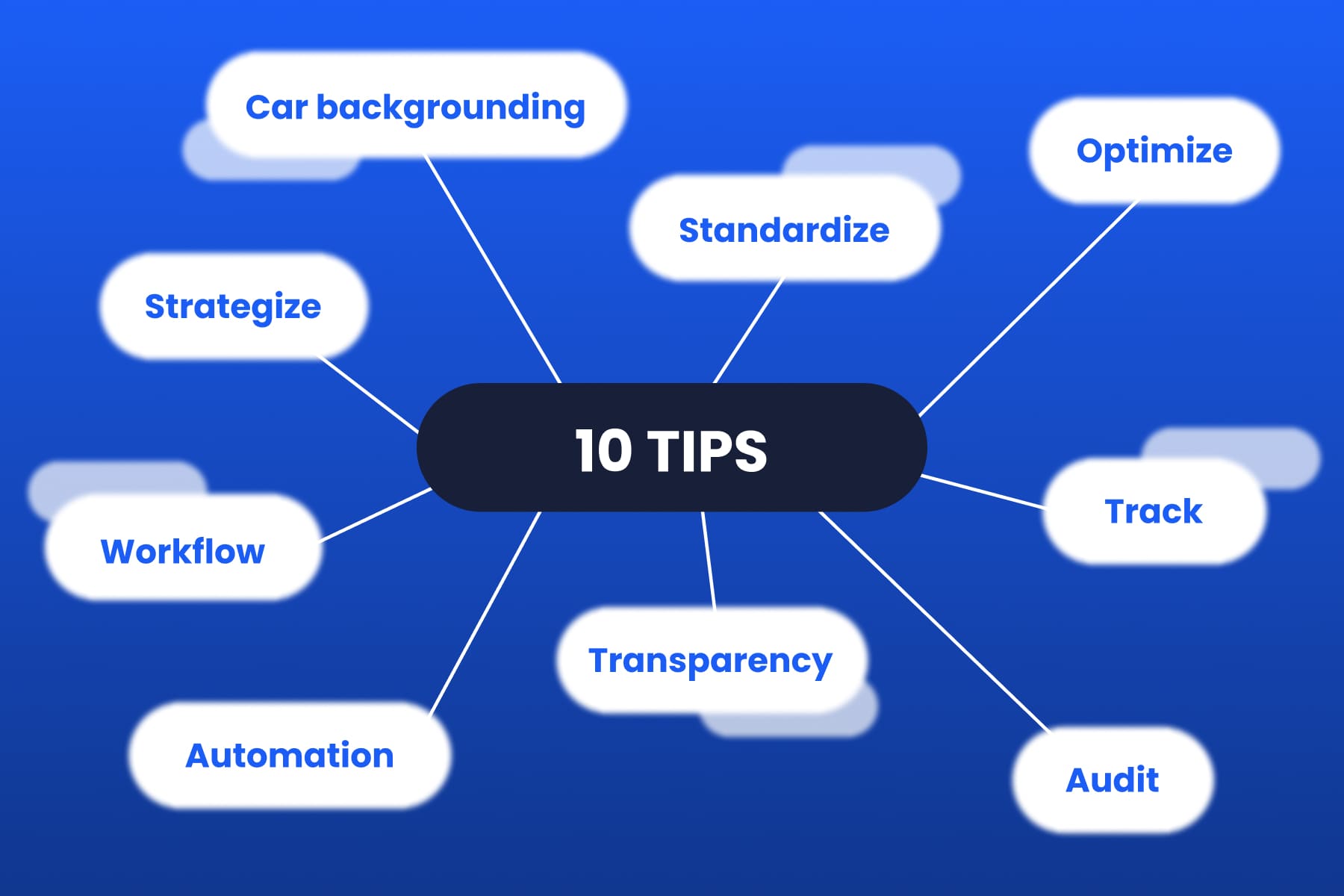
Your vehicle merchandising is your first sales pitch. Before a shopper calls, clicks, or walks through your door, they’re already judging your inventory by how it looks online. With 90% of shoppers considering photos extremely important in their buying decision, the quality and speed of your vehicle imaging directly shape your lead volume.
Here’s the gap: 84% of dealers believe strong merchandising increases profit, yet only 12% think their listings actually stand out. That disconnect exists because most stores lack the systems to deliver consistent visuals at scale. This article gives you 10 practical ways to close the gap, from smarter dealership vehicle photography to AI-powered workflows that compress your recon-to-live time.
TL;DR
Improve your vehicle merchandising by standardizing photo quality by price band, using AI car backgrounding for every listing, adding 360 spins to high-value units, writing descriptions that sell, and cutting your recon-to-live time through automation. The 10 tips below cover visual foundations, content strategy, and the measurement systems that help you scale, including where AI for car dealerships fits into your daily workflow.
Build Your Visual Foundation
1. Standardize Your Photo Count by Price Band
Not every vehicle needs the same level of investment. Set tiered standards based on price and inventory age:
- Under $15K: 18 to 22 photos focused on condition and key features
- $15K to $35K: 25 to 30 photos with full exterior and interior coverage
- Above $35K: 30+ photos plus a 360 spin
- Aged inventory (45+ days): Re-shoot or upgrade backgrounds, even if photo count is already met
Use a guided mobile capture app with shot list templates to keep every photographer on the same standard across rooftops.
2. Optimize Your First Photo for SRP Thumbnails
Your hero image is the single biggest driver of SRP click-through. Choose a three-quarter front angle on a clean background, well-lit and tightly framed. This is the thumbnail shoppers see on mobile search results and marketplace feeds.
Test your hero images on a mobile device weekly. Over 80% of browsing happens on phones, so if the photo looks muddy or hard to read as a small thumbnail, it’s costing you clicks.
3. Use AI-Powered Car Backgrounding to Clean Up Every Listing
Why Car Backgrounding Is the Fastest Way to Upgrade Your Inventory Listings
Cluttered lot photos featuring dumpsters, other cars, or uneven lighting make buyers hesitate. Car backgrounding replaces those distracting scenes with clean, branded showroom visuals, giving every vehicle the same polished presentation.
CarCutter’s AI backgrounding handles this automatically. The system segments the vehicle, matches the background perspective and lighting to the original photo angle, and adds realistic shadows and reflections. You can apply dealership branding, choose from 2D backgrounds or 3D virtual showrooms, and process hundreds of images without manual editing.
It’s one of the fastest ways to elevate your automotive inventory imaging, delivering consistent, showroom-quality visuals at scale.
4. Add 360 Spins to High-Value Inventory
Interactive 360-degree spins give online shoppers an immersive experience that static photos simply can’t match. They increase time-on-page and build stronger purchase intent.
Prioritize 360 spins for vehicles priced above $30K, unique or hard-to-find units, and aged inventory that needs a visibility boost. CarCutter’s 360 spin tool creates fully backgrounded exterior spins with a lightweight web player that embeds directly into your VDP.
Strengthen Your Content and Workflow
5. Write Vehicle Descriptions That Sell, Not Just List Specs
A spec sheet tells buyers what a vehicle has. A good description tells them why it matters. Structure your approach by vehicle segment:
- Trucks and SUVs: Lead with towing capacity, bed length, and recent service. Connect to local use cases like job sites or weekend hauling.
- Luxury and premium: Highlight tech features, comfort, and condition details. Mention low miles, one-owner history, or CPO status.
- Economy and commuter: Focus on MPG, reliability, and cost-to-own. Speak to first-time buyers and budget-conscious families.
Include reconditioning specifics (“new brakes, full detail, fresh tires”) instead of vague language like “well-maintained.” Specificity builds trust.
6. Cut Your Recon-to-Live Time with Workflow Automation
How AI Helps Car Dealerships Streamline Visual Merchandising
Every day a vehicle sits unlisted is a day it can’t generate leads. AI for car dealerships now covers the most time-consuming merchandising steps: photo quality checks at capture, automatic background replacement, and direct publishing to your IMS or website.
CarCutter’s mobile app provides real-time AI quality feedback during capture, flagging blur, poor framing, or bad lighting before upload. Images then flow through AI processing and publish automatically via DMS/IMS integrations.
This kind of AI-powered photo automation for dealership inventory means fewer bottlenecks, fewer retakes, and faster time-to-web across every rooftop.
7. Add Trust Signals to Every VDP
Buyers want transparency. Include inspection badges, vehicle history report links, warranty details, and reconditioning summaries on every vehicle detail page. These trust signals reduce friction and improve lead quality.
67% of VDP visits engage with the media carousel. Make sure what shoppers find there builds trust, not doubt.
If you want a faster path to consistent, professional listings across your entire inventory, book a demo with CarCutter to see how automated visual merchandising works in practice.
Scale and Strategize
8. Audit Your Marketplace Feeds Monthly
Your photos and descriptions are only as good as the feed that delivers them. Run a monthly check across every rooftop:
- Spot-check 10 random VINs on major marketplaces. Are hero images loading correctly?
- Compare your IMS photo count to what’s live. Missing images signal a sync issue.
- Verify trim and spec accuracy on 5 high-value units.
- Check price sync lag between your DMS and marketplace listings.
- Click 10 VDP links from marketplace SRP pages to catch broken links.
With 80% of car shoppers considering purchasing online, your marketplace presence is too valuable to leave unmonitored.
9. Measure, Test, and Improve Continuously
Good merchandising isn’t a one-time project. Set up a measurement system:
- Track SRP click-through rate, VDP time-on-page, and lead-to-sale conversion by listing quality tier.
- Run A/B tests: compare AI-backgrounded listings against original lot photos on 50% of aged inventory for 14 days, then measure VDP engagement and lead volume.
- Review results monthly and adjust your approach based on data.
Without a measurement loop, you’re guessing. With one, every improvement compounds.
10. Know What to Own In-House vs. What to Outsource
What to Prioritize Before Hiring a Car Dealership Advertising Agency
An advertising agency can drive traffic, but if your listings have weak photos and thin descriptions, that traffic won’t convert. Before outsourcing your ad spend, invest in your merchandising foundation: consistent vehicle imaging, strong VDP content, and automated photo workflows.
Own your visual standards and photo process in-house. Use tools like CarCutter that integrate directly with your existing DMS and IMS to keep control of quality and speed. Then, when you work with a car dealership advertising agency, every dollar they spend drives traffic to listings that are ready to convert.
It depends on the price band. Vehicles under $15K need 18 to 22 strong photos. Units between $15K and $35K should have 25 to 30. For inventory above $35K, aim for 30+ plus a 360 spin. Quality and consistency matter more than raw count.
Car backgrounding replaces cluttered or inconsistent lot backgrounds in vehicle photos with clean, branded showroom-style scenes. It gives every listing a professional, consistent look that builds buyer trust and improves SRP click-through rates.
AI for car dealerships automates time-consuming tasks like photo quality checks, background replacement, and image processing. This reduces time-to-list, ensures visual consistency across inventory, and frees your team to focus on selling.
Follow consistent angle sequences, use clean backgrounds, ensure proper lighting, include both interior and exterior shots, and brand images with dealer logos. These vehicle imaging best practices build trust and increase VDP engagement.
Do both, in the right order. Ads without strong listings equal wasted budget. Listings without traffic equal wasted effort. Fix your VDP foundation first, including photo quality, descriptions, and trust signals. Then drive paid traffic to listings that actually convert.
Use mobile capture apps with guided workflows, automate background replacement, and integrate photo tools directly with your DMS or IMS. CarCutter’s mobile app and AI processing pipeline are built for exactly this workflow.
Yes, but prioritize them. Use 360 spins on high-margin inventory above $30K, unique or hard-to-find units, or aged inventory that needs a visibility boost. Measure VDP engagement before and after to confirm the impact.
A three-quarter front angle on a clean background. This is the thumbnail shoppers see on SRP pages and marketplace feeds. A bright, well-framed hero shot with consistent branding drives higher click-through rates. Test it on a mobile screen to confirm it reads well as a small thumbnail.